
Back to Simplify The Market
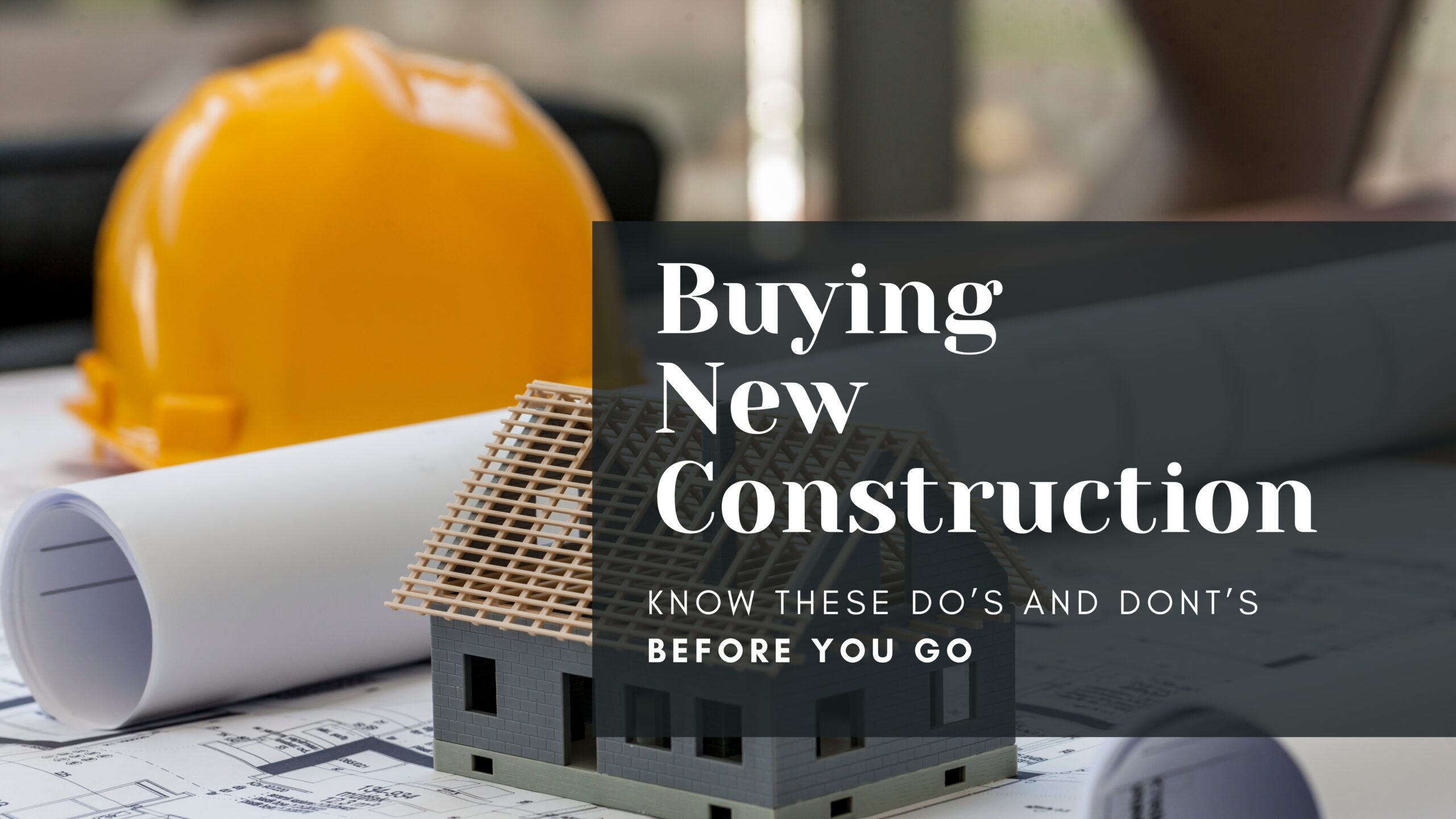
Buying New Construction?… Know these Do’s and Dont’s Before You Go
Posted: January 8, 2026
Buying a newly built home can be exciting — everything is brand new, , and often more energy-efficient than older homes. But new construction comes with its own set of pitfalls and advantages. This guide gives clear, easy-to-follow do’s and don’ts to help you make smart decisions and avoid costly surprises.
Why this matters
New construction is different from resale: you’re often buying from a builder, not a homeowner; timelines can shift; and contracts, warranties, and upgrade choices require careful attention. Follow these practical tips to protect your money and get the home you expect.
The Do’s:
- Do hire your own buyer’s agent or real estate attorney – Builder sales reps typically represent the builder’s interests. A buyer’s agent or attorney who understands new construction protects you during contract negotiation, upgrade selection, and closing. They can spot unfavorable clauses and negotiate better terms.
- Do get pre-approved (not just pre-qualified) – A mortgage pre-approval from a lender gives you a realistic budget and strengthens your position. If using the builder’s lender to get incentives, still get independent loan quotes to compare rates, fees, and closing costs.
- Do research the builder’s reputation – Check online reviews, visit other communities, ask for references from recent buyers, and look for complaints with local consumer protection or licensing boards. Visit completed homes to see the quality and how issues were handled.
- Do understand the contract and allowances – Read every page. Know what base price includes and what is an upgrade. Understand allowances for cabinetry, countertops, appliances, and landscaping — these are estimates and often don’t cover premium choices.
- Do get independent inspections during key stages – Hire a licensed inspector to check foundation, framing/pre-drywall, and final walkthrough. Inspectors know what to look for even in new homes (plumbing, electrical, grading/drainage, HVAC installation, etc.).
- Do build a realistic timeline and follow up on delays – Expect some delays. Ask for a projected timeline and updates. Know how completion dates affect financing, deposits, and rent-back or move-in arrangements.
- Do verify warranties and how to submit claims – Ask for written copies of builder and manufacturer warranties (structural, mechanical, appliances). Know warranty durations and the process for service requests and emergency repairs.
- Do choose upgrades wisely and budget for them – Decide which upgrades add value (kitchen, bathroom, flooring) and which are purely cosmetic. Keep an eye on how upgrades affect appraisal and resale value.
- Do confirm lot specifics and site conditions – Understand orientation (front/back yard), easements, setbacks, utility locations, and future adjacent phases. Check drainage, tree removal, and whether the lot is on a slope that could affect landscaping costs.
- Do keep thorough records – Save contracts, change orders, emails, receipts, inspection reports, and warranty paperwork. This will help with future claims and resale.
The Don’ts:
- Don’t assume the model home is exactly what you’ll get – Model homes are usually upgraded and staged. Always ask for a copy of the standard features list and compare it line-by-line to the model.
- Don’t skip reading the fine print – Pay attention to deadlines, default remedies, arbitration clauses, liquidated damages, and homeowner obligations. Some builder contracts limit buyer remedies or require disputes to go through arbitration.
- Don’t over-improve for the neighborhood – Upscaling everything may not be recouped at resale if neighborhood comps are modest. Consider the neighborhood when planning high-cost upgrades.
- Don’t rely only on the builder’s lender incentives – Builder incentives can be tempting (rate buydowns, closing cost credits), but they can come with higher purchase price or limited lender choices. Compare with independent lenders.
- Don’t ignore site and soil concerns – Ask if the lot needed or will need grading, fill, special foundations, or retaining walls. Site work costs can be significant and sometimes charged to the buyer.
- Don’t forget to check HOA rules and fees – If the development has a homeowners association, review Covenants, Conditions & Restrictions (CC&Rs), fees, and reserve funding. Understand common area maintenance and any restrictions on rentals or exterior changes.
- Don’t let move-in happen without a punch list – Walk the home with the builder before closing and create a written punch list of defects. Make sure the builder agrees to complete items and understands timelines for repairs.
- Don’t assume everything will be perfect because it’s new – New homes often have cosmetic or minor mechanical issues when first occupied. Expect and document them; use the warranty process to address them.
- Don’t sign change orders without written cost and schedule impacts – Verbal agreements are risky. Always get written change orders that spell out extra cost, how that changes the final price, and whether completion dates shift.
- Don’t skip a final walk-through right before closing – Verify that agreed repairs are finished, appliances are working, and systems (HVAC, plumbing, electrical) perform correctly.
Practical questions to ask the builder
- What is included in the base price? Can I get a written list?
- What are typical upgrade costs and current allowances?
- Who represents me in the contract — the builder’s agent or my agent?
- What warranties do you provide (length and coverage)?
- What happens if my closing is delayed or the builder is behind schedule?
- Can I have independent inspections at foundation, pre-drywall, and final stages?
- Are there any seller-paid closing costs or lender incentives? What are the conditions?
- What are HOA fees and rules, and is there a reserve fund?
Checklist before you close
- Final walkthrough and completed punch list
- Copies of warranties and appliance manuals
- Receipt of permits and certificate of occupancy
- Confirmation of utilities transferred (water, electric, gas, internet)
- Proof of final landscaping or confirmation of who is responsible
- Updated survey (if required) showing lot lines
- Review final closing statement for builder credits, fees, and prorations
Bottom line
New construction offers the appeal of a brand-new, customizable home — but it also brings unique risks. Protect yourself by doing homework on the builder, reading contracts carefully, using your own agent or attorney, getting independent inspections, and documenting everything. With a little extra vigilance, you’ll enjoy the benefits of a new home while avoiding common pitfalls.Would you like a printable checklist or a sample list of questions you can take to the builder? I can create a one-page PDF-style checklist or a customizable questions list for your community.
